In a time when smartphone releases feel more incremental than revolutionary, the Fairphone 6 stands out as a meaningful shift. Its U.S. arrival is more than just another handset launch—it taps directly into a growing demand for right-to-repair, sustainability, and long-term device ownership. For American buyers who are increasingly eco-conscious, tired of planned obsolescence, or just interested in a phone that’s built to last, this is a big moment.
Gas prices, inflation, and waste aren’t just issues for transportation; they resonate across all consumer goods. As EV adoption climbs, more people are thinking about their carbon footprint—and that mindset is crossing over into how we choose our phones. The Fairphone 6 arrives in this context, offering a modular, repairable smartphone made from fair and recycled materials, backed by years of software support.
Modular by Design: What Makes the Fairphone 6 Unique
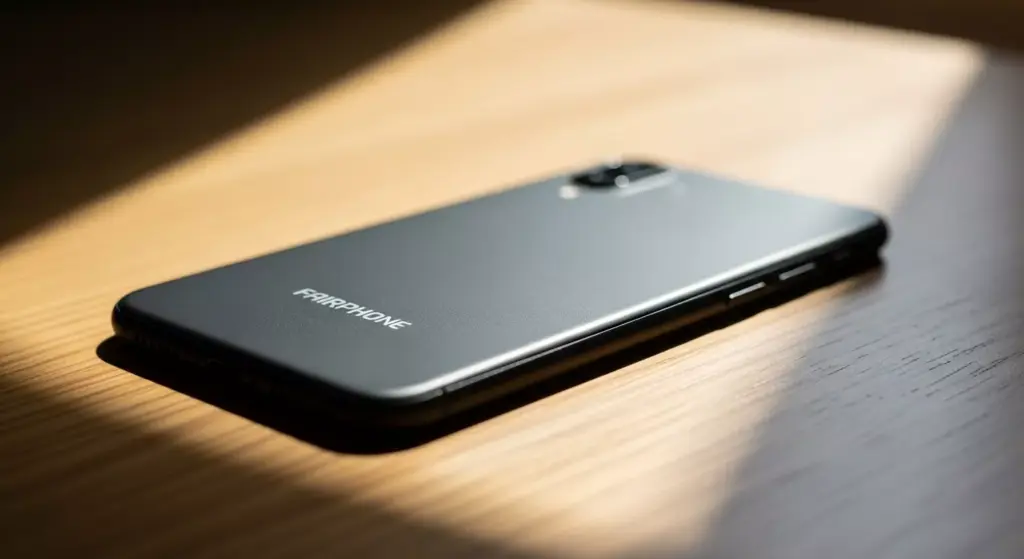
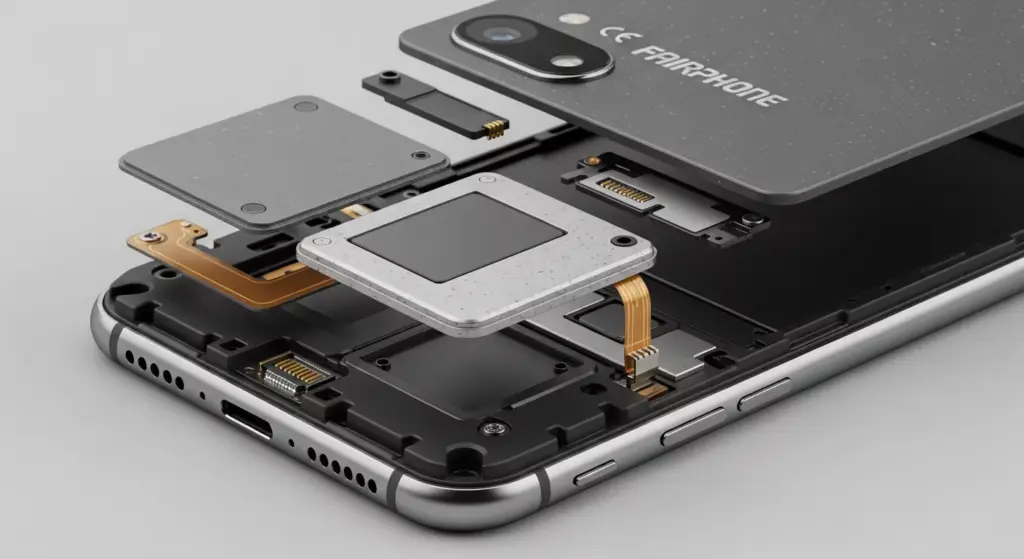
One of the biggest talking points of the Fairphone 6 is its modular, repairable design. Unlike most modern phones glued shut, the Fairphone 6 can be disassembled using just a T5 Torx screwdriver—no heat needed. Repairs are remarkably user-friendly: 12 different components (battery, camera, USB-C port, rear cover, and more) are replaceable.
But beyond functionality, the 6’s design is stylish in a subtle way. It comes in Forest Green, Horizon Black, and Cloud White. There are swappable backplates like a cardholder, a finger loop, or a lanyard — all things you don’t often see on mainstream phones.
Take a look at this post : Why the Huawei Pura 80 Is Making a Bold Comeback in 2025
Specs That Hold Their Own (While Staying True to the Ethos)
Here’s a breakdown of what’s under the hood:
| Specification | Fairphone 6 |
|---|---|
| Processor | Snapdragon 7s Gen 3 |
| RAM / Storage | 8 GB LPDDR5 + 256 GB UFS 3.1 (expandable via microSD up to 2 TB) |
| Display | 6.31″ LTPO OLED, 10–120 Hz adaptive, up to 1,400 nits |
| Rear Camera | 50 MP main + 13 MP ultra-wide |
| Front Camera | 32 MP |
| Battery | 4,415 mAh, user-replaceable, 30W wired charging |
| Software | Android 15; 7 Android upgrades + 8 years of security support |
| Water / Dust | IP55 rating |
| Connectivity | Wi-Fi 6E, Bluetooth 5.4, NFC, Dual SIM / eSIM |
Real-Life Impact:
That modular battery means you can carry a spare instead of relying on a power bank — ideal for long road trips or power outages. The 120 Hz display gives smooth visuals, but thanks to LTPO tech, it can downshift for efficiency. With 8 years of updates, the Fairphone 6 is built to stay relevant far longer than a typical two- or three-year refresh cycle.
Take a look at this post : Galaxy S25 Edge Launch: Ultra-Thin Build Meets 200MP Camera
U.S. Launch: Timing, Pricing, and Strategy
After months of being a Europe-only phone, the Fairphone 6 is now officially available in the U.S. via Murena (the /e/OS partner), priced at $899. This isn’t just a hardware play — Fairphone is leaning into a broader cultural shift in America around repair rights.
Fairphone CEO Raymond van Eck recently called out the idea that sustainable tech has to be more expensive or lower-performing. The goal: making responsible, repairable tech that competes on quality and pricing.
The Latest, Freshest Updates & Buzz
- Repairability Score: The Fairphone 6 scored a perfect 10/10 from iFixit, thanks to its modular design and minimal use of adhesive.
- Software Patch (Nov 2025): The FP6 got a new build (FP6.QREL.15.151.0) fixing refresh rate issues, reboot bugs for North America, and auto brightness tweaks. support.fairphone.com
- Right-to-Repair Momentum: Fairphone’s U.S. launch aligns with growing right-to-repair laws across states, giving the brand a timely policy tailwind.
- User Feedback: Some early adopters report bugs — like screen jitters, Wi-Fi instability, or misplaced volume keys. Reddit But others praise the battery life, modular charm, and sustainability goals.
How It Stacks Up: Fairphone 6 vs Mainstream Rivals
- vs. Apple / Samsung Flagships: It’s not going to match the bleeding-edge specs of flagship iPhones or Galaxy S-series. But what it offers is repairability and long-term value.
- vs. Google Pixel: You get similar long-term software support (though perhaps not on-par with Google’s own), but a more sustainable, modular build.
- vs. Other Modular Phones (e.g., Framework laptops): Fairphone is rare in the smartphone world for modularity — especially at this build quality and global reach.
- vs. Budget Phones: For $899, you’re not getting a “cheap” phone—but you are getting something built to last, rather than something you might ditch in 2-3 years.
Take a look at this post : Apple iPhone 17 Pro: When Your Phone Starts Driving the Future
Risks, Trade-offs & Who Should Buy Now
Trade-offs & Risks:
- Some early users have reported software bugs, particularly around refresh rate and UI.
- Performance is solid but not bleeding-edge; the Snapdragon 7s Gen 3 is capable, but not a flagship-tier monster.
- USB is limited to USB-C 2.0, which is slower than many modern phones.
- Louder voices in Reddit threads caution about customer support and part availability.
Who It’s For:
- Ethical shoppers who prioritize sustainability, fair labor, and zero-waste design.
- Tinkerers & DIYers who want to repair their phone themselves and avoid tossing it.
- Long-term planners who are in it for value over many years, not just the latest shiny thing.
- Travelers or minimalists who want a phone with a replaceable battery and a “light” mode (Moments) to reduce distraction.
✅ Conclusion
The Fairphone 6 isn’t just another mid-range smartphone — it’s a statement. With its modular build, long software support, and ethical material sourcing, it targets a growing audience that cares about more than just specs. For U.S. buyers, its arrival now is particularly timely given surging right-to-repair sentiment and increasing demand for sustainable tech.