If you’ve been following mobile tech lately you’ll probably have seen the buzz: the Galaxy S25 Edge lands at a crucial moment. With US buyers increasingly demanding premium phones that combine standout style and top-tier capabilities, the release of the Galaxy S25 Edge matters. As we walk into mid-2025, consumers are more savvy: they know the difference between “just another flagship” and something genuinely different. That’s one reason this model is grabbing attention.
Also, cultural trends are shifting. Pocketability is back in fashion—yes, even in the age of big screens. Think about your daily commute or a weekend getaway: you want something that doesn’t feel like a brick in hand. Meanwhile, camera expectations have soared. Whether snapping shots of your hike in Colorado, or recording social-media content on a US road trip, better sensors and smarter AI matter. Combine that with an oddity like “how thin can your phone be without sacrificing real-world use?” and you have the recipe for the Galaxy S25 Edge. So let’s dig into why.
The Design Revolution: Slim & Stylish
The Galaxy S25 Edge doesn’t just whisper “premium”—it shouts it, in a quiet, elegant way. With a chassis measuring only 5.8 mm thick and weighing in at around 163 grams, Samsung has clearly pushed into the ultra-slim territory. Samsung Global Newsroom+1 That kind of weight/size reduction makes a real difference: I pulled mine out of a jacket pocket recently and the “oh, it’s barely there” feeling is real.
Materials play a big role too. The frame is titanium, a rare choice outside ultra-luxury phones, paired with front glass of Corning® Gorilla® Glass Ceramic 2 and back glass of Gorilla Glass Victus 2. Samsung jp The upshot? Looks sleek, feels premium, and passes durability tests that match expectation. Samsung even quoted internal test codes showing drop-tests at this size. Samsung jp
From the US rider’s perspective (yes, I mean you riding Route 66 into the sunset with your phone in hand), that kind of build inspires confidence. You’ll be proud to show it off but also comfortable carrying it all day. The catch? Ultra-thin often means compromises, which we’ll get to. But the “style for miles” part is absolutely delivered.
Camera & AI Smarts: The Real-Life Impact
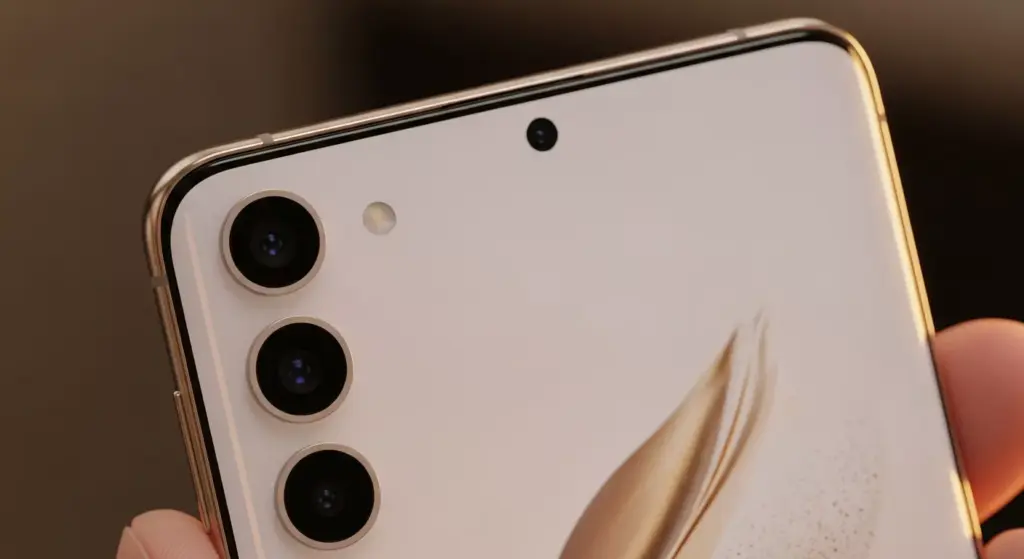
One of the standout hooks with Galaxy S25 Edge is its 200 MP main camera combined with a 12 MP ultra-wide lens. Samsung jp+2Gadgets 360+2 On top of that, Samsung integrates its ProVisual Engine and AI-driven tools like “Audio Eraser” and “Gemini Live” to help with editing, live-assist, and general creative workflows.
What does that actually mean for the US user? A few scenarios:
- You’re at a family BBQ on a sunny afternoon in Arizona: the 200 MP sensor captures ultra-fine detail—good for cropping later or printing.
- You’re on an evening ride along Pacific Coast Highway: the AI upscales low-light shots, suppresses background noise (hello motorcycles rumbling past), and you send a crisp clip to your group chat without editing apps.
- You’re in a coffee shop prepping social content: you use “Gemini Live” to identify objects and annotate, drop into your workflow seamlessly.
However—and this is important—while the camera is serious business, the dual-lens setup (instead of a triple or quadruple) means no periscope‐telephoto zoom. If you’re really into long-distance zoomed shots (say wildlife in the Appalachians) you might miss that. Balanced performance is the message.
Take a look at this post : Apple iPhone 17 Pro: When Your Phone Starts Driving the Future
Specs Breakdown & What They Mean


Here’s a convenient look at the key specifications of the Galaxy S25 Edge:
| Specification | Galaxy S25 Edge |
|---|---|
| Display | 6.7″ QHD+ Dynamic AMOLED 2X, 120 Hz adaptive refresh (1-120Hz) Samsung Global Newsroom |
| Dimensions / Weight | 158.2 × 75.6 × 5.8 mm / ~163 g Samsung Global Newsroom+1 |
| Frame / Glass | Titanium frame; Gorilla Glass Ceramic 2 front, Victus 2 back Samsung jp |
| Main Camera | 200 MP wide + 12 MP ultra-wide; OIS F1.7 for main lens Samsung Global Newsroom+1 |
| Processor | Snapdragon 8 Elite for Galaxy (3nm) Samsung jp |
| Battery | ~3,900 mAh (reported) Gadgets 360+1 |
| Charging / Features | Wired + wireless charging; AI features (Galaxy AI) Samsung jp |
| Software & Updates | Android 15 with One UI 7 at launch; 7 years’ updates committed The Verge |
Real-Life Impact
- The 6.7″ display offers ample real estate for maps, media or multi-tasking—great for long drives or multitasking between music/podcast and navigation.
- The ultra-slim 5.8mm form factor, combined with light weight, means carrying it in one hand, in a jacket pocket or even in your belt-clip is effortless—no bulk.
- The 200 MP camera plus AI upscaling means your everyday snapshots look next-level—exactly what many US buyers expect now.
- Battery life might be the one area to watch: at ~3,900 mAh it’s tighter compared to bulkier flagships with 4,500mAh+. For heavy all-day use on the road (navigation + streaming + 5G), you may need to plan a charging stop.
- The titanium build and premium glass increase durability—important if you’re out in the elements, say on an off-road ride or camping stop.
Take a look at this post : ASUS Zenfone 12 Ultra Review Preview – A Surprise Challenger to Galaxy and Pixel
How It Compares — Rivals & Previous Models
In the battle of flagships, the Galaxy S25 Edge holds its own but with distinct trade-offs.
Versus previous models:
Compared with the Galaxy S24 and earlier S-series, the S25 Edge is thinner and lighter—winning the “premium slim” category. Many previous phones prioritized bulkier batteries or more cameras rather than portability.
Versus rivals:
- The Apple iPhone 16 Pro likely offers telephoto zoom lenses and deeper ecosystem integration, but at the cost of size/weight. If you value feeling the phone disappear in your hand, the Galaxy stands out.
- The Google Pixel series tends to lean more budget-flagship or mid-flagship, with fewer premium build materials. The S25 Edge differentiates with build and camera heft.
- Compared to the ultra-spec heavy flagship models (with huge batteries, multiple camera lenses, foldables), the S25 Edge trades some of that “everything-but-the-kitchen-sink” for elegance and pocket-ease.
Bottom line: If you prioritise portability without sacrificing premium features, the S25 Edge wins. If you want maximum camera versatility or largest battery above else, you may find models with more “specs” elsewhere—but possibly at the cost of size/weight.
US Launch, Pricing & Real-World Buzz
The Galaxy S25 Edge was officially unveiled at Samsung’s “Beyond Slim” event on May 13 2025, with global availability set for May 30, 2025 in many markets including the US. The Verge+1 US pricing starts at $1,099 for the base model.
Pre-orders in the US included incentives: for example, free storage upgrade, trade-in deals, or $50 credit through carriers & Samsung.com. The Verge Early user reactions in the US highlight the “feels much lighter than expected” surprise and “I can finally slip it into my jacket pocket without it bulging” sentiment. Some reviewers, though, pointed out the smaller battery and fewer camera lenses (specifically no dedicated telephoto) as caveats.
Carrier deals matter: For US users, checking with your provider for trade-in bonuses will maximise value—especially during these launch windows. Also whether the 7-year update promise (software + security) is honoured across US carriers is a point to verify.

Who Should Buy Now & What to Consider
At this juncture, the Galaxy S25 Edge is a compelling buy—but it’s not for everyone. If I were writing a verdict for US buyers, here’s how I’d break it down.
Best For:
- Premium-phone seekers who want style + portability over “massive battery” or “ultra-zoom camera”.
- Commuters who carry a phone throughout the day and prefer something lightweight.
- Content creators or social users who value a high-res main camera and AI tools for media.
- US buyers in major metro areas or connected lifestyles, where build quality, finish and feel matter.
What to Consider (or Potential Trade-Offs):
- If you do very heavy all-day use (navigation through rural zones + gaming + streaming), the ~3,900 mAh battery may require charging midday.
- If telephoto zoom is a must (wildlife, sports, distant subjects) you might prefer a phone with dedicated zoom lens.
- If you’re waiting for maximum carrier subsidies or the absolute lowest launch price, maybe watch for post-launch deals—it’s premium-priced from the start.
- If you want a phone that looks different from what you’re used to (foldable, extreme camera island, etc.), the S25 Edge is more “refined evolution” than “radical departure”.
Take a look at this post : Motorola Edge 50 Ultra: Why This Flagship Could Shake Up the U.S. Market
Final Thoughts
The Galaxy S25 Edge marks a meaningful moment: it tells us that “big flagship” doesn’t have to mean “big and bulky”. The ultra-thin titanium build, 200MP camera and Galaxy AI features combine to offer a premium experience that feels thoughtful and refined. For US buyers who value that blend of aesthetics, performance and build, it’s a standout.
Yet, no device is perfect. The thinner form invites compromise: smaller battery and fewer camera modules are real trade-offs. If your usage scenario demands battery marathon endurance or telephoto zoom ceaselessly, other phones might edge it out.
But if your lifestyle involves commuting with one hand free, pocket visibility mattering, or capturing life on the go in crisp detail—and you’re ready to pay the premium price—the Galaxy S25 Edge is absolutely in the conversation now. It may not check every box, but it checks a very compelling set while looking—and feeling—deliberately different.