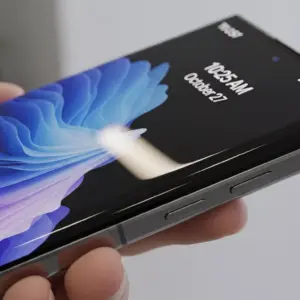
There’s a certain nostalgia when you hear “Razr.” For anyone who held one in the mid-2000s, it was more than a phone — it was an attitude. Fast-forward to 2025, and Motorola is bringing that same energy back, this time wrapped around flexible glass, high-end cameras, and intelligent software that quietly learns how you live.
The Motorola Razr Ultra 2025 isn’t just another flip phone; it’s Motorola’s statement that foldables have grown up. The company is betting big on American buyers who want style and substance in equal measure. With Samsung’s Galaxy Z Flip 7 looming and Apple still rumored to test foldable concepts, the Razr Ultra enters the ring swinging.
Why now? Because in 2025, the conversation has shifted. Consumers care about screen brightness, camera quality, and how effortlessly a phone blends work with leisure. Gas prices fluctuate, EVs dominate car talk, and people crave portability without compromise. The Razr Ultra 2025 answers that need — and it does so with unmistakable flair.
The Design Story – Less Gimmick, More Glamour
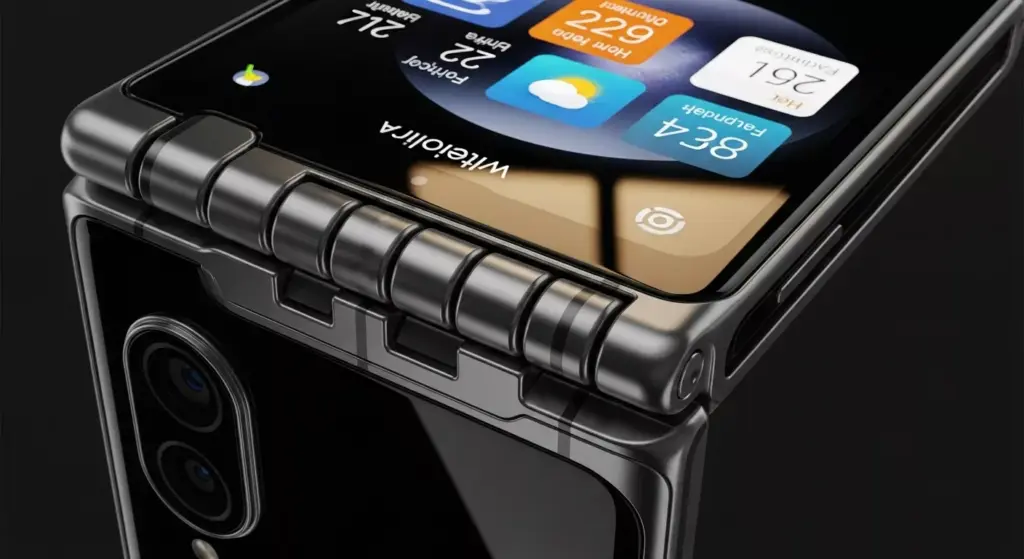
The first thing that hits you is refinement. The hinge mechanism feels tighter yet smoother, with less wobble than any earlier Razr. Motorola calls it a “dual-axis torque hinge,” designed to withstand over 600,000 folds — enough for years of daily use.
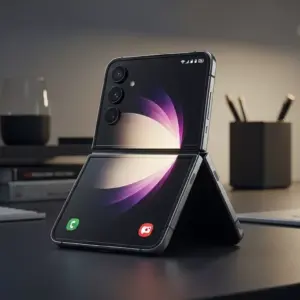
The exterior sports a satin-glass finish framed by matte aluminum edges. Depending on lighting, colors shift subtly — from graphite black to electric violet. It’s elegant but never shouty. Closed, it’s pocket-friendly; opened, it feels expansive.
Inside, the 7.0-inch pOLED display runs at 165 Hz refresh and peaks near 4,500 nits brightness. Outdoors in Texas sunlight, it stays readable without squinting. Fold it shut and the 4.0-inch cover display remains fully usable — run Maps, Spotify, or WhatsApp without opening it.
Under the Hood – Performance That Keeps Up with Life
Motorola didn’t hold back this year. The Razr Ultra 2025 runs the Snapdragon 8 Elite (3 nm) chipset paired with 16 GB LPDDR5X RAM and up to 1 TB UFS 4.0 storage. In day-to-day use, it feels snappy — apps open instantly, multitasking is seamless, and high-refresh scrolling feels liquid-smooth.
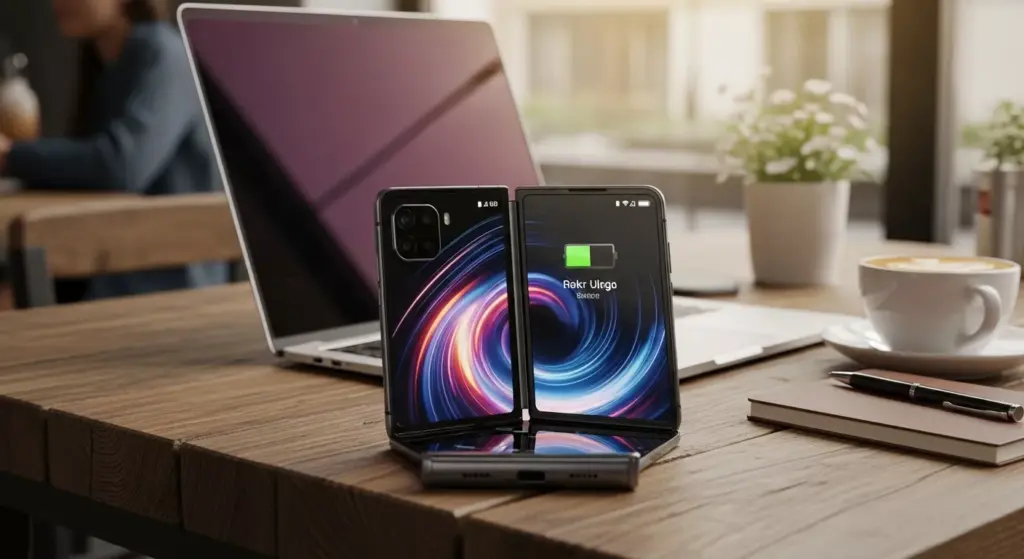
Battery life is solid, too. The 4,700 mAh cell powers through a full day of mixed use — streaming, calls, photography, and social apps. When you finally do plug in, 68 W wired and 30 W wireless charging make top-ups quick. Reverse wireless charging is available for earbuds or watches — a small but convenient bonus.
For travelers or daily commuters, that combo matters. Imagine leaving Chicago for a weekend in Nashville — navigation, music, camera, hotspot — and still ending the night above 20 %. That’s where the new 8 Elite chip’s efficiency pays off.
Take a look at this post : Motorola Edge 50 Ultra: Why This Flagship Could Shake Up the U.S. Market
Quick Spec Sheet
| Category | Details |
|---|---|
| Processor | Snapdragon 8 Elite (3 nm) |
| RAM / Storage | 16 GB LPDDR5X / 512 GB – 1 TB UFS 4.0 |
| Main Display | 7.0″ pOLED, 165 Hz, ~4,500 nits |
| Cover Display | 4.0″ pOLED, 165 Hz |
| Cameras | 50 MP main + 50 MP ultrawide + 50 MP front |
| Battery | 4,700 mAh / 68 W wired / 30 W wireless / 5 W reverse |
| OS | Android 15 + Moto AI Suite |
| Build | Aluminum frame, titanium hinge, IPX8 resistance |
Cameras & AI – A Different Kind of Smart
At first glance, the numbers impress: 50 MP main, 50 MP ultrawide, and a 50 MP front camera. But it’s the AI-backed image processing that makes this camera feel alive. Motorola’s Moto AI quietly adjusts color tones, predicts subjects, and improves clarity mid-shot.
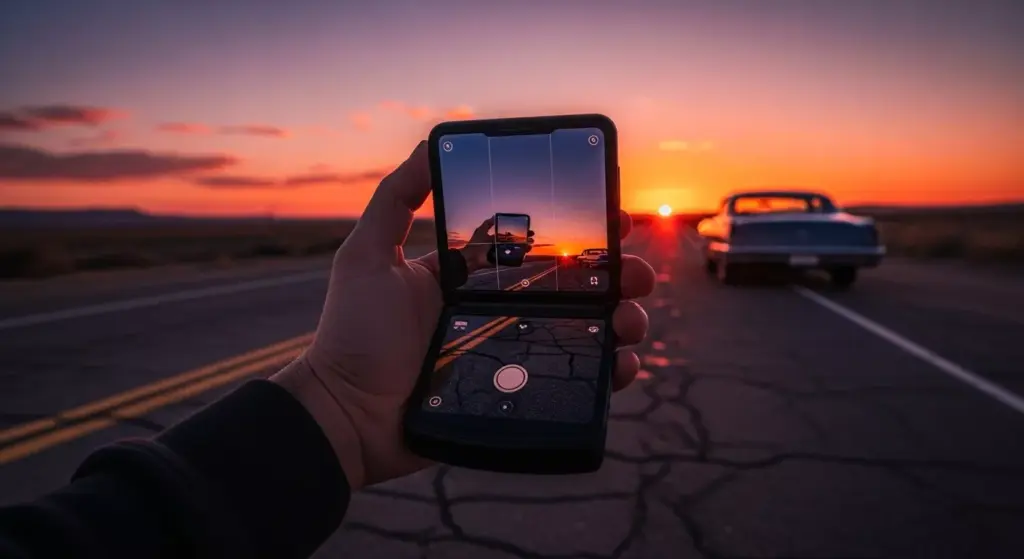
Say you’re catching sunset on Route 66 — the system detects the warm palette and subtly enhances reds and golds. Or in low-light bars across downtown Austin, it balances shadows without over-brightening faces.
The cover screen also doubles as a live-viewfinder. You can snap selfies using the main 50 MP sensor, meaning sharper shots for social media creators. For vloggers, tent-mode with hands-free capture feels intuitive — no tripod required.
AI doesn’t stop at photos. Voice summaries, “Catch Me Up” news recaps, and context-aware suggestions are built-in. Moto’s algorithm quietly learns when to surface travel updates, appointments, or reminders.
Living with It – The Everyday Flip Experience
Foldables once felt like delicate experiments. Not anymore. The Razr Ultra 2025 feels sturdy enough for everyday American life. The hinge locks at multiple angles — great for video calls or countertop streaming. Screen-crease visibility has been minimized; you’ll forget it’s foldable once you start scrolling.
There’s also an emotional appeal. People notice it. Open it at a diner or airport lounge and strangers still ask, “Is that the new Razr?” It brings back a social spark smartphones once lost.
And yes, Android 15 integration is seamless. Split-screen multitasking works better, gestures are intuitive, and Motorola’s near-stock interface stays light. There’s minimal bloat, plenty of customization, and clean Google integration — exactly what tech-savvy U.S. buyers prefer.
Pricing, Availability & U.S. Carrier Deals
Motorola launched the Razr Ultra 2025 globally in April 2025, with U.S. retail starting around $1,299 for 512 GB. The 1 TB model crosses $1,399. Major carriers — Verizon, T-Mobile, AT&T — are bundling it with early trade-in incentives and 24-month upgrade plans.
Seasonal deals have already appeared. Some stores offer up to $800 off with eligible trade-ins, making the Razr Ultra effectively a mid-range buy for loyal Android users. Holiday-season promotions, particularly around Black Friday and Cyber Monday, are expected to push Discover visibility high.
For Motorola, this is crucial. The brand is building strong partnerships again, much like its early Razr days, and betting on nostalgia plus innovation.
Competitor Check – Why the Razr Ultra 2025 Matters
When compared with the Samsung Galaxy Z Flip 7, the Razr Ultra offers a larger cover display (4.0″ vs 3.4″) and faster refresh (165 Hz vs 120 Hz). The battery’s also slightly larger, and the AI-assisted camera setup gives it a creative edge.
Apple’s rumored “foldable iPhone” is still at prototype stage. For now, Motorola enjoys rare breathing room. Its design identity feels distinct — retro-meets-future.
Beyond tech specs, it’s about how the Razr Ultra connects emotionally. It revives a brand story U.S. consumers actually remember. It merges nostalgia with modern AI, giving older Razr fans a reason to return.
Real-World Impact – Why This Launch Matters Now
Every few years, the smartphone industry hits a point where innovation feels incremental. Foldables changed that, but the Razr Ultra 2025 perfects it. It’s the first Razr in years that feels both exciting and reliable.
With a flagship chip, true all-day battery, bright screens, and elegant design, Motorola delivers a product that belongs at the top of the conversation again. For U.S. buyers tired of same-looking slabs, it’s refreshing — a return of personality to phones.
The fact that it hits stores right before the holiday season adds marketing magic. Expect Discover’s feed to buzz — shorts, reels, influencer hands-ons, and early deals all driving clicks. In a market dominated by sameness, a sleek flip that actually performs could become the unexpected 2025 star.
Take a look at this post : Honor Magic 8 Pro Unveiled: The Flagship That Finally Feels Different
Final Verdict – Should You Buy It?
If you want a foldable that feels premium without being fragile, the Motorola Razr Ultra 2025 deserves a place on your shortlist.
Buy it if:
- You want the best cover display and top-tier refresh rate.
- You’re nostalgic for the Razr brand but expect flagship performance.
- You value AI enhancements that make daily tasks smarter, not gimmicky.
Skip it if:
- You need multi-day battery endurance.
- You prefer large-slab phones for productivity.
- Price sensitivity is high — deals will improve with time.
Still, among U.S. flagship foldables, this phone brings the most balanced combination of tech, style, and nostalgia. Motorola has re-earned a seat at the flagship table.