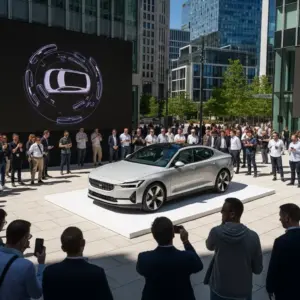
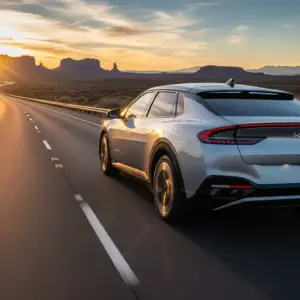
Toyota’s decision to resurrect the C-HR nameplate as a full-blown battery-electric vehicle (BEV) is more than just a nostalgic revival — it’s a signal of serious ambition in the U.S. EV market. For American drivers, this compact crossover represents a bold entry point: performance-grade power, all-wheel drive, and a range that’s increasingly practical for daily driving. As gas prices continue to fluctuate and more Americans embrace electric options, the new C-HR+ EV couldn’t arrive at a more opportune moment.
On top of that, Toyota’s move reflects a broader shift in its corporate strategy. For years, the automaker leaned heavily into hybrids — now, with dedicated EVs like the C-HR+ BEV, it’s leaning into full electrification. With EV infrastructure growing across the U.S., and more fast chargers available (especially Tesla’s NACS network), this crossover could really hit the sweet spot for buyers who want performance, practicality, and long-distance capability.
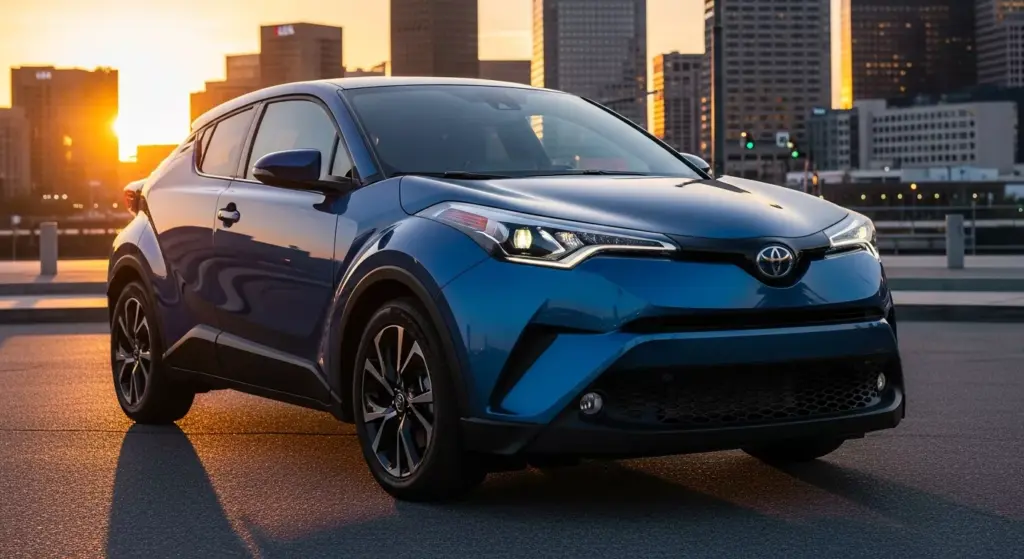
338 HP Meets 290 Miles: Performance That Punches Above Its Weight
Under the hood, the 2026 Toyota C-HR+ EV packs a serious punch. Toyota confirms a combined output of 338 horsepower, driven by dual electric motors (one on each axle), making standard all-wheel drive part of the package.
That power translates to a quick 0–60 mph time of around 5 seconds, bringing sportiness to utility. But what’s even more compelling is the estimated 290-mile range on a full charge, thanks to a 74.7 kWh battery pack.
Real life impact? Imagine cruising on I-95 between cities, or running errands across your city — you might rarely need to plug in daily. And for weekend adventures, that 290-mile range gives you serious flexibility, especially when paired with fast charging.
Take a look at this post : Jeep’s 2026 Recon EV Launched — 650 HP, Removable Doors & 250-Mile Range
Fast Charging, Smart Regeneration & Driver Control
The C-HR+ EV supports DC fast charging via a North American Charging Standard (NACS) port — that means access to a rapidly growing network, including Tesla Superchargers. PR Newswire Under ideal conditions, Toyota estimates a 10–80% charge in about 30 minutes. Toyota USA Newsroom+1
On the regenerative braking front, Toyota has added paddle shifters on the steering wheel to let drivers pick from four levels of regen. Toyota USA Newsroom This gives you granular control — whether you want energy recovery or a more coasting behavior, especially useful in city driving or hilly terrain.
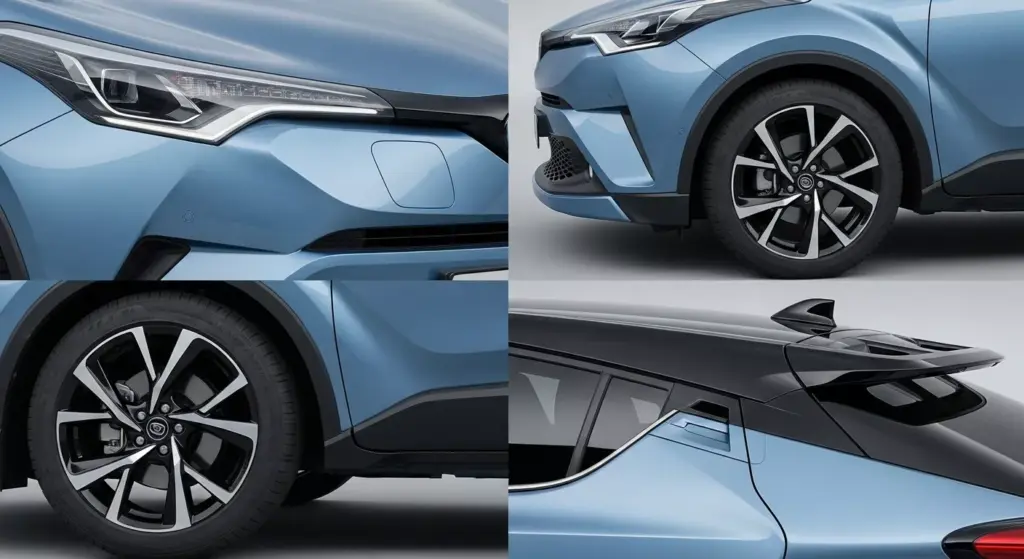
Interior & Tech: Premium Yet Practical
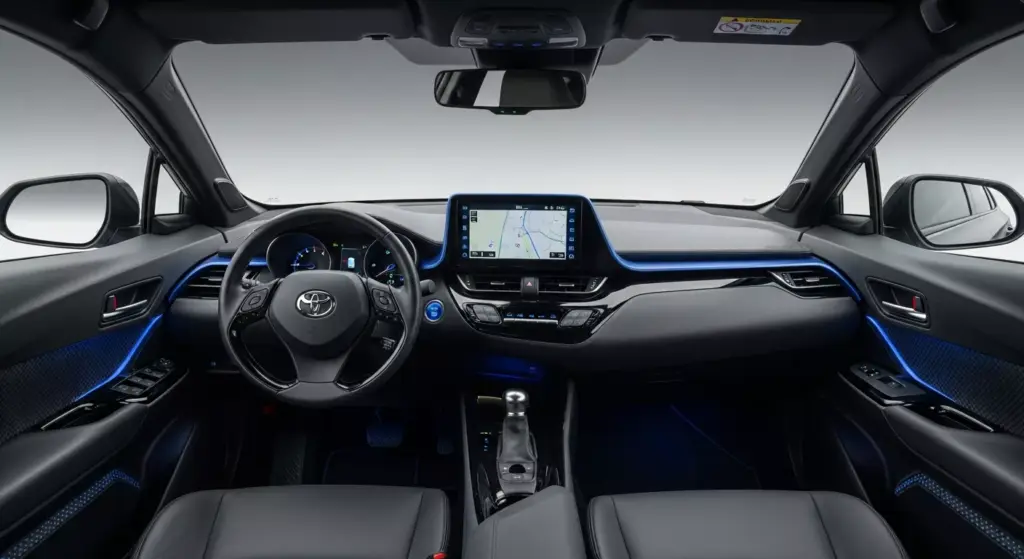
Inside, the C-HR+ EV brings a modern and clean cabin. There’s a 14-inch touchscreen running Toyota’s Audio Multimedia system, along with a fully digital gauge cluster. Convenience hits are strong: dual wireless phone chargers, soft-touch materials, customizable ambient lighting, and a 60/40-folding rear seat.
For safety, Toyota will pack it with its Safety Sense 3.0 suite — advanced driver-assist features like adaptive cruise control, lane assist, and automatic emergency braking.
In daily life, these features mean the C-HR+ EV isn’t just a performance crossover — it’s genuinely usable for work commutes, weekend getaways, or grocery runs.
Trim Options & Driving Variants
Toyota plans to offer the C-HR+ EV in at least two trims in the U.S.: SE and XSE. Outside (in Europe), Toyota has revealed FWD and AWD versions, with two different battery sizes (57.7 kWh and 77 kWh) for different driving preferences.
While the U.S. launch model seems set to use the 74.7 kWh pack, its AWD setup suggests the more powerful variant may be prioritized for U.S. buyers.
Take a look at this post : Ferrari’s First EV, the Elettrica, Set to Launch in Late 2026
Spec Table: 2026 Toyota C-HR+ EV
| Specification | Value / Detail |
|---|---|
| Platform | e-TNGA |
| Battery | 74.7 kWh lithium-ion |
| Powertrain | Dual motor, AWD |
| Power Output | 338 hp combined |
| 0–60 mph | ~5 seconds |
| Range | ~290 miles (manufacturer estimated) |
| Charging Port | NACS (DC fast), Level 1 & Level 2 AC |
| Fast Charge (10–80%) | ~30 minutes (ideal) |
| Regen Braking | 4 levels via paddle shifters |
| Cargo Space | Up to 25.4 cu ft (with rear seats folded) |
| Infotainment | 14″ touchscreen, digital cluster, wireless CarPlay / Android Auto Toyota USA Newsroom |
| Safety | Toyota Safety Sense 3.0 |
Real-Life Impact: These specs make the C-HR+ EV a well-balanced EV for both city and highway driving. The battery size and range give you enough juice for long trips, while the fast charging capability and adjustable regen make it flexible for daily use. The AWD performance adds confidence — whether it’s snow, rain, or spirited driving.
How It Stacks Up: Rivals & Previous Versions
- Compared to its gas-powered predecessor (first-gen C-HR): The old C-HR was a subcompact crossover with modest power. This electric version is a complete leap in performance, range, and modern EV tech.
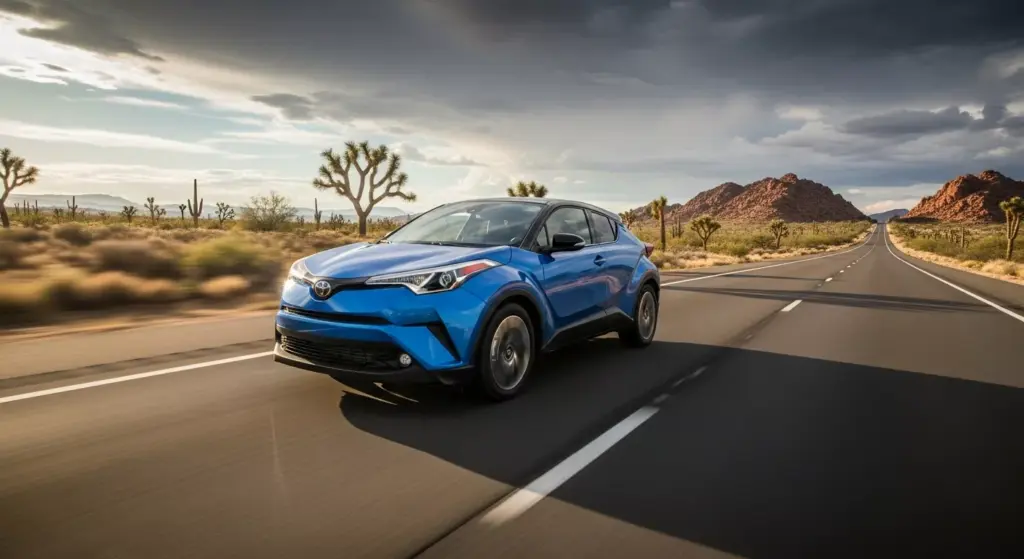
- Vs. Toyota bZ4X: The C-HR+ EV shares its e-TNGA platform with the bZ4X. Carscoops+1 But with a smaller, sportier footprint, and likely a performance edge in AWD trims, the C-HR+ could attract buyers who want something nimble and fun.
- Vs. Other EV crossovers: It may rival vehicles like the Tesla Model Y, Ford Mustang Mach-E, or compact EVs from other luxury or mainstream automakers — especially on the performance and range front. For instance, with 338 hp and 290 miles of range, it’s competitively powerful.
Additionally, a sibling model is launching: the 2026 Subaru Uncharted EV, built on the same e-TNGA platform. Car and Driver The Uncharted’s AWD version also outputs 338 hp, making it mechanically very close — but with Subaru-specific styling and positioning.
What’s New & Trending (2025–2026)
- Toyota officially confirmed the 2026 C-HR Battery Electric Vehicle (BEV) for U.S. dealerships.
- The car was revealed in May 2025, with Toyota outlining its performance, range, and charging details.
- In Europe, Toyota launched the C-HR+ EV version with two battery options (57.7 kWh and 77 kWh) and both FWD and AWD variants.
- There’s strong EV infrastructure alignment in the U.S.: the C-HR+ EV supports NACS, giving it access to thousands of DC fast-charging stations.
- Toyota has also invested heavily in EV infrastructure in the U.S.: recently opening a large battery plant in North Carolina, which will support future EVs like the C-HR+.
What Enthusiasts & Buyers Are Saying
On Reddit and other EV-hate/love forums, reactions are buzzing:
“This new C-HR+ seems like [Toyota’s] first really decent attempt at making an EV. It’s got a lot of range, fast charging, and is rumored to have a decent enough price.”
“The Toyota bZ Compact SUV prototype … I’m guessing it will be performance-focused, have standard AWD, and have over 300 miles of range.”
There’s optimism that Toyota is finally delivering an EV that can compete meaningfully — not just in volume, but in desirability.
Who the 2026 C-HR+ EV Is For (and Who Might Wait)
Buyers who should strongly consider it:
- Performance-oriented EV drivers who want AWD and torque without sacrificing daily usability.
- Commuters who need a compact crossover with decent cargo space.
- EV adopters who want long-range capability plus fast charging.
- Toyota loyalists who’re excited by the brand’s EV strategy and multi-pathway approach.
Buyers who might hold off:
- Those looking for more affordable EVs: pricing hasn’t been confirmed yet, and performance EVs often come at a premium.
- Buyers who prioritize maximum range above 300 miles: while 290 is solid, others in the market may offer more.
- Drivers who rarely need AWD or don’t value performance driving — they may find simpler EVs more efficient.
Take a look at this post : Why the New CLA with EQ Technology Is a Game-Changer for U.S. Luxury EV Buyers
✅ Final Thoughts
The Toyota C-HR+ EV (2026) marks a compelling return for a nameplate that once struggled in the U.S., now reimagined as a modern, all-electric, performance-packed crossover. With 338 hp, AWD, a 290-mile range, and fast charging via NACS, Toyota is clearly playing to both sportiness and substance.
Its arrival reflects a broader shift in Toyota’s EV roadmap: from hybrid dominance to serious BEV ambition. For U.S. buyers, that means more choices — and real competition in the EV crossover space.
If you’re someone who values performance, utility, and the trusted Toyota brand, the C-HR+ EV could be a smart pick. But if you’re strictly seeking long-range efficiency on the cheapest model possible, it may be worth watching its final U.S. price and comparing with rivals.